KYTHIRA TRAVEL GUIDE

My Reservation
Kythira Ferries

Reviews

4.8 stars
1571 reviews

YOUR PERSONAL
FERRY BOOKING AGENT
Each of our customers is assigned a personal Ferry Booking Agent who speaks their language and replies within 3 working hours. Your agent is available to you before, during and after your trip.

Greekferries Club Bonus Per Mile
Collect 'miles' every time you travel by ferry, regardless of the ferry company you travel with!
Redeem your Miles and get discounts and FREE tickets!
Kythira & Antikythira Ferries Greek Islands
Ships and Ferries to the islands of Kythira & AntikythiraTravel Information for ferries to Kythira & Antikythira. Islands of Kythira & Antikythira.
KYTHIRA > CHURCHES & MONASTERIES
CHURCHES & MONASTERIESThe Monastery of the Madonna of Myridiotissa
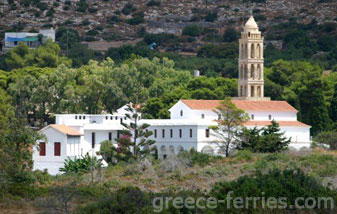
The Monastery of the Virgin Mary of Myrtidiotissas is located in the region of Myrtidia, so named as the area was wooded with myrtle. The monastery is considered the most holy on the island. Legend has it that a shepherd saw an angel in his dream indicating where the icon was located. The next day he went to that point and found the icon of the Virgin Mary. He then built a chapel on that site and placed the icon in it. Above this chapel a larger more majestic church was built in 1857. The small chapel still stands today.
The most important religious custom of Kythira takes place on the Easter Sunday and is the procession from Myrtida to Hora and around the villages. The monastery celebrates the finding of the icon on 24th September.
Holy Monastery
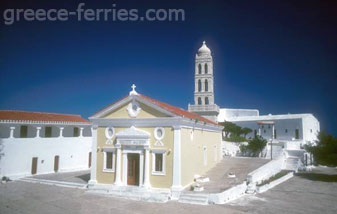
The Holy Monastery is located on a mount at the northern end of the island. Theodoros Kolokotronis escaped to Kythira in the 19th century and went to the old monastery that in ruins and prayed for the freedom of the people from their oppressors promising to rebuilt the church when Greece is free and in fact he kept his promise. The monastery celebrates on 6th August.
Agios Petros/St Peter
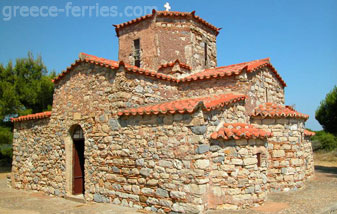
The Byzantium monument is in the form of a domed cross and dates between 961-1200 AD and in a similar style to the churches of Agia Varvara and Agios Theodoros in Paleohora. The stonework is in limestone. The murals are the work of an important artist of the 15-16th century. The paintings depict the 3 holy steps: intent to the left, the vestry to the right and in the centre the holy alter, there is no connection between them. Probably in Venetian times the openings were built in keeping with the customs of the Catholic Church. Another original difference is the fact that Agios Petros is over the main arch of the holy step as opposed to the customary Virgin Mary.
Agia Elessa
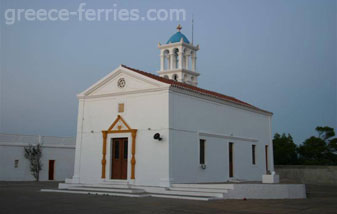
The Monastery of Agia Elessas is located on a mount in the south west of the island. The current church was built in 1840 on the site of a smaller earlier chapel. The legend of Agia Elessa says that she came to Kythira to devote herself to Christ to escape from her heathen father, but he followed and killed her in 375 AD. A chapel was built in her honour on the site of her martyrdom. The monastery celebrates 1st August.
The Monastery of Agios Theodoros
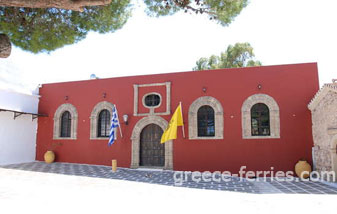
The blessed Theodoros is the patron saint of Kythira. He came from Koroni to Kythira in 921 and founded the church of the saints Sergiou and Vakhou. In 922 he died and his shrine was found later by Monemvasiotes seamen. A chapel was built in his honour about 12-13th century on the site where he was buried. The monastery was renovated by Athanasios Valerianos, Bishop of Kythira in 1630. The picture of the saint depicts him holding the garrison because he was considered the protector of those infected by the plague.

Why book with Greekferries Club
Simple. We are here for you every step of the way.

The Greekferries
Booking Engine
Enter your ferry routes and travel dates and we guide you from there. Find all schedules, availability and prices and book your ferry tickets in three simple steps!

The Best Ferry Ticket Price
We include all the discounts you are entitled to. You don’t have to do any research!

The Secure Payments
Our payment gateway is fully compliant with the PSD2 SCA / EMV 3-D Secure 2.0 directives and guidelines.

The Chat Service
If you encounter any difficulty or simply have a question, use the chat service in our booking engine and we’ll be happy to help!

YOUR Personal
Ferry Booking Expert
Whether you complete your booking online or ask for our assistance, you will be paired with an experienced agent who speaks your language fluently.